
Department of Computer Science · Saint Louis University
Artificial Intelligence and Robotics Lab
AI for perception and robotics: machines that sense, reconstruct, and act reliably in the physical world.
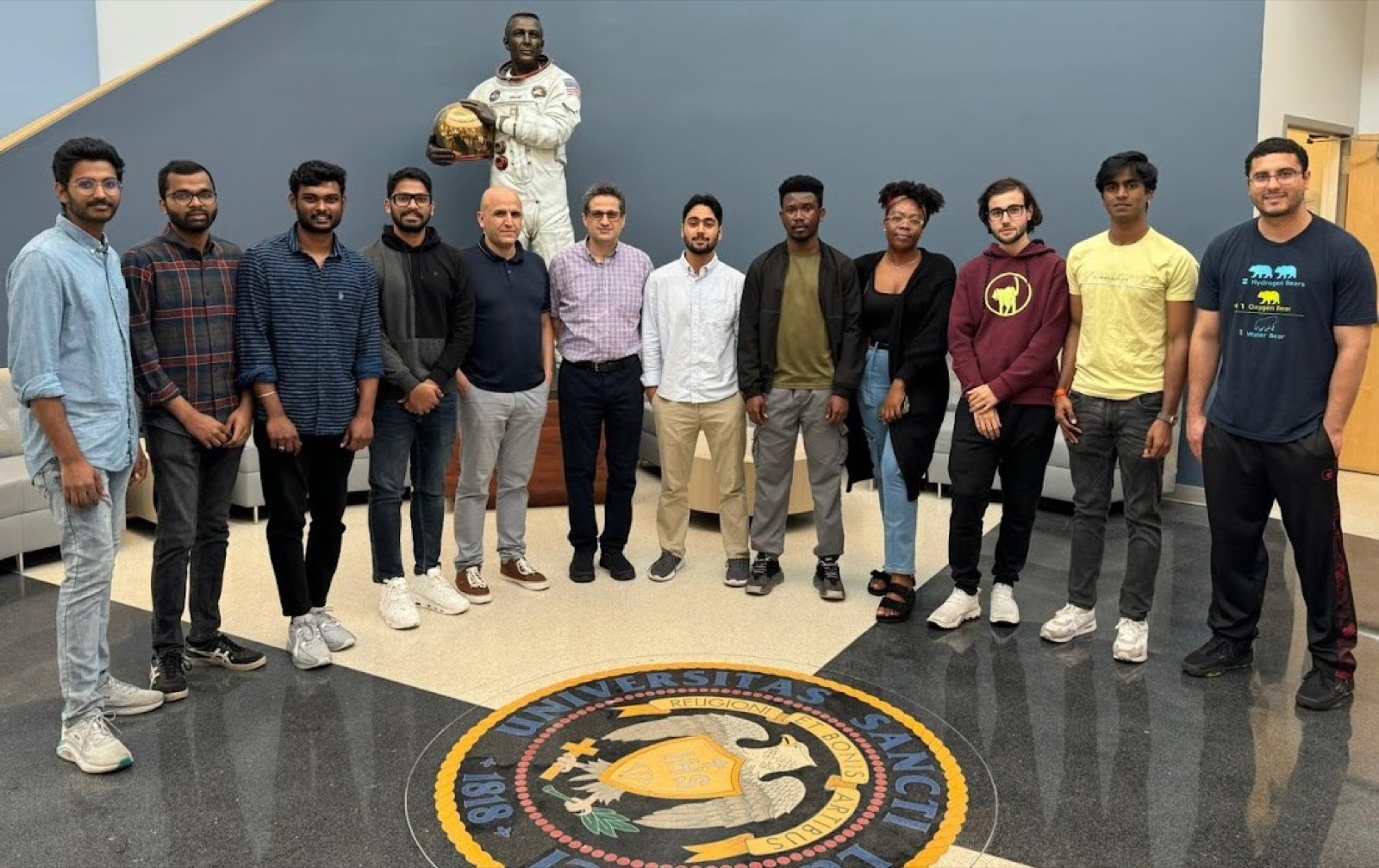
AIRLab builds perception systems that let robots, drones, and autonomous platforms work where ordinary cameras fail — under fast motion, glare, reflections, and low light. We combine geometric computer vision, the physics of light and sensing, and machine learning, and test our methods on real hardware, from industrial arms and quadruped robots to teams of drones.
Research areas
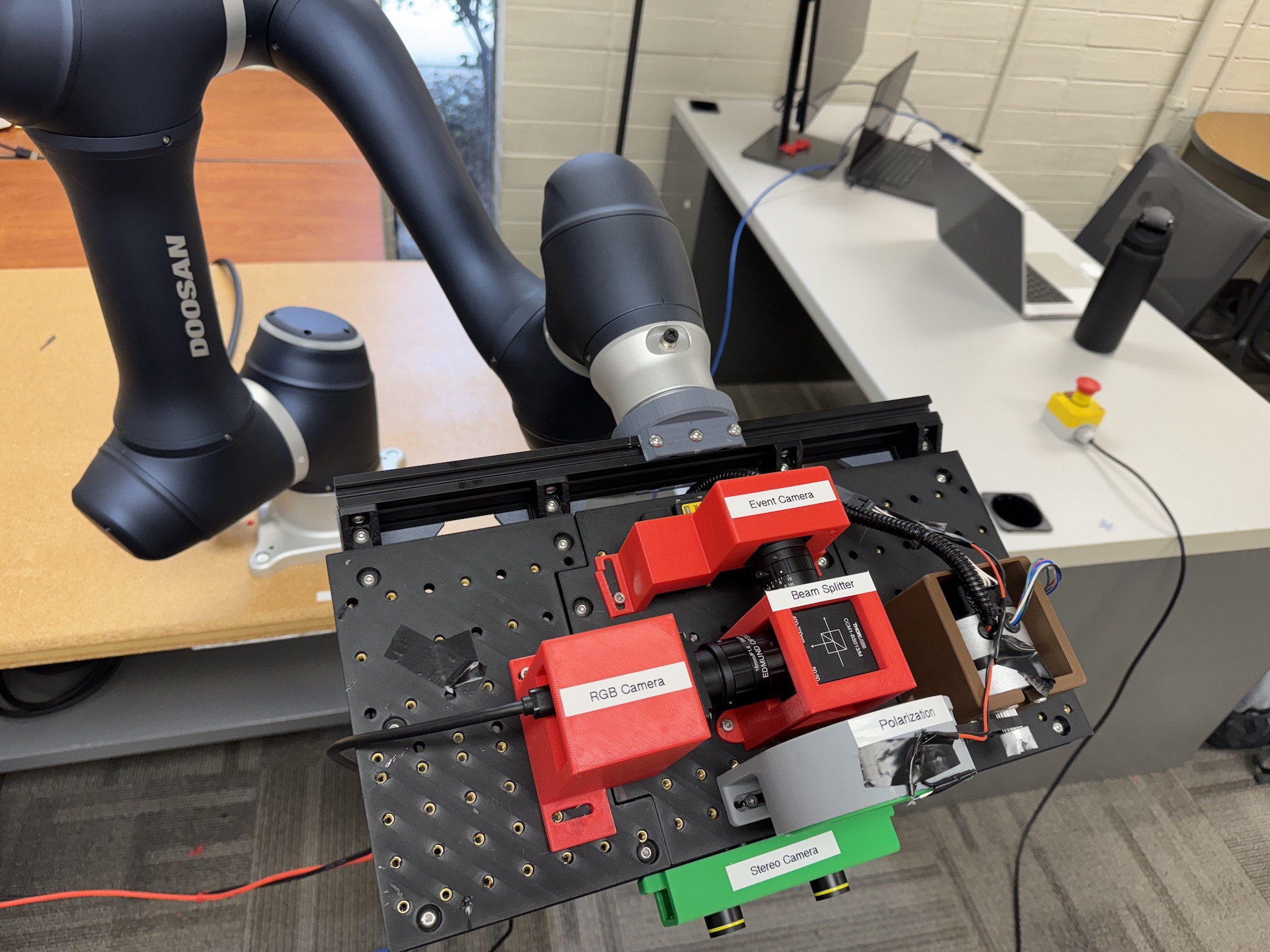
Robotics perception
Grounding machine perception in the geometry and physics of sensing, so that robots can interpret their surroundings reliably under real-world conditions.
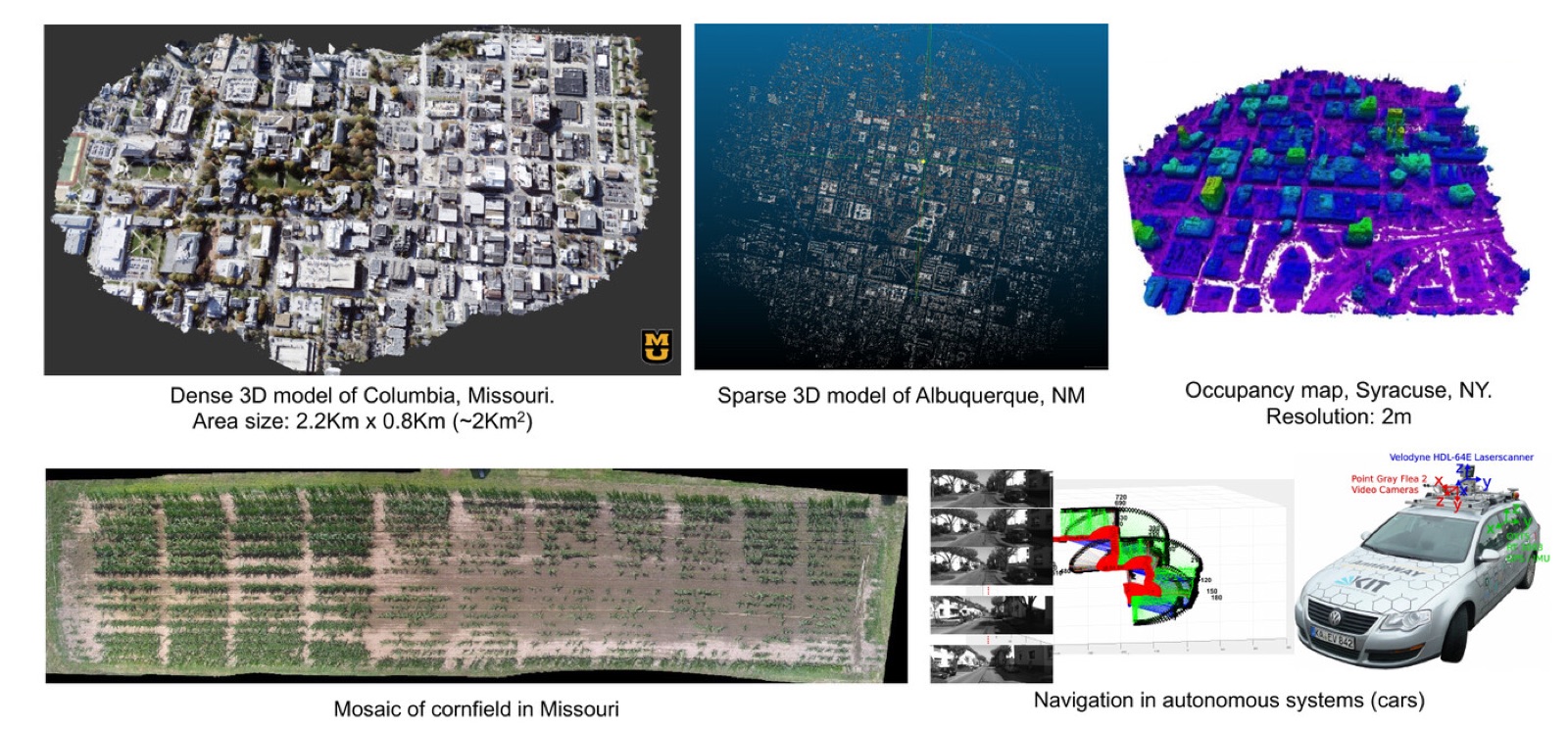
Geospatial AI and distributed aerial sensing
Turning aerial, multi-drone, and visible–infrared imagery into 3D models and digital twins, computed onboard and at the edge.
Latest news
All news →- Oct 2026 Quantum machine learning paper accepted at NAPS 2026
- Oct 2026 DensePol accepted at WACV 2027
- Oct 2026 TESS-Net accepted at WACV 2027
- Oct 2026 U.S. Patent 12,755,509 issued
Selected publications
All →- DensePol: Dense-Angle Polarization Dataset for Learning-Based Polarimetric Vision
- TESS-Net: Trust and Event-Edge-Guided State Space Deblurring Network
- Physics-guided Rolling Polarization Estimation (PRoPE)
- NeuroCommitSSM: Decision-Centric Shared Autonomy for Safe Assistive Manipulation via EEG–EMG–ET Commit Readiness
Patents
All publications →Methods developed in the lab and protected as U.S. patents.
- Compressed Spatial Frequency Transform for Feature Tracking, Image Matching, Search, and Retrieval
- Flexible Multi-Camera Focal Plane: A Light-Field Dynamic Homography Approach
- Method for Fast Camera Pose Refinement for Wide Area Motion Imagery
Looking for students and collaborators
Students and researchers interested in perception, robotics, and 3D vision are welcome to get in touch. Write with your CV and research interests.